Coming to Know Edwin Muir
November 10, 2018 (2–5pm)
The October Gallery, 24 Old Gloucester Street, London WC1N 3AL
Contemplative study of a few poems by the 20th Century Scottish Poet Edwin Muir
Event Description
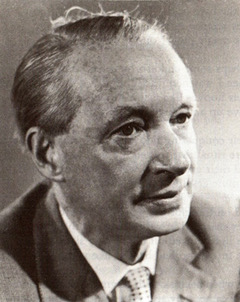 “We learn about poetry,” Edwin Muir wrote, “in much the same way as we learn about human beings, that is by coming to know it and them.” Let us attempt, then, to learn about the poetry of the Scottish poet Edwin Muir by spending time together coming to know some of Muir’s poems, open to the sounds and the imagery, entering into the mythic worlds Muir creates, merging the universal fables with our individual experience. Since we will try to make our reading a contemplative practice, we will hope to share both our moments of confusion and our moments of insight.
“The central theme [in Muir’s poetry] is the paradoxical co-existence in us of the consciousness of mortality and of immortality, of the feeling of being imprisoned within a fore-ordained course in a short length of time and of the occasional feeling of freedom and timelessness. The individual’s descent from Eden into the wilderness of time is, as in The Story and the Fable, connected with the fall of mankind. The journey is at once that of each individual and that of the race. … We should start by seeing what he shows us, and entering into the feeling of the poems” (P H Butter).
“… the unconscious, as Muir understands it, is no mere receptacle of memories suppressed or repressed; it is in its own way a place of long, long thoughts. ‘I think’, he says, ‘that there must be a mind within our minds which cannot rest until it has worked out, even against our conscious will, the unresolved questions of our past’” (N D O’Donoghue).
Speaker
Robert-Louis Abrahamson is Emeritus Professor of English at the University of Maryland. He studied Scottish literature at Edinburgh University, and has spent much of his career working with mythic literature, mainly from the Western tradition. He has spoken and published on Dante, the American Transcendentalists (Emerson, Thoreau, Whitman, Dickinson) and Charles Williams, and on his namesake, Robert Louis Stevenson. In 2017 he gave a presentation on Thoreau at the Chisholme Institute. His edition of Stevenson’s Virginibus Puerisque, the first of five volumes of Stevenson’s essays for the Edinburgh University Press’s 40-volume Works of Stevenson, was published in October, 2018.
Booking & Fees
Cost: £8 + £1.54 registration fee from Eventbrite
https://heartwisdom.eventbrite.co.uk
Or via Facebook: https://www.facebook.com/events/253134365547758
Entry by ticket – refreshments provided
Enquiries:
Michael Cohen at london@beshara.org or 020 8300 7928
Course / Event location
The October Gallery, 24 Old Gloucester Street, London WC1N 3AL