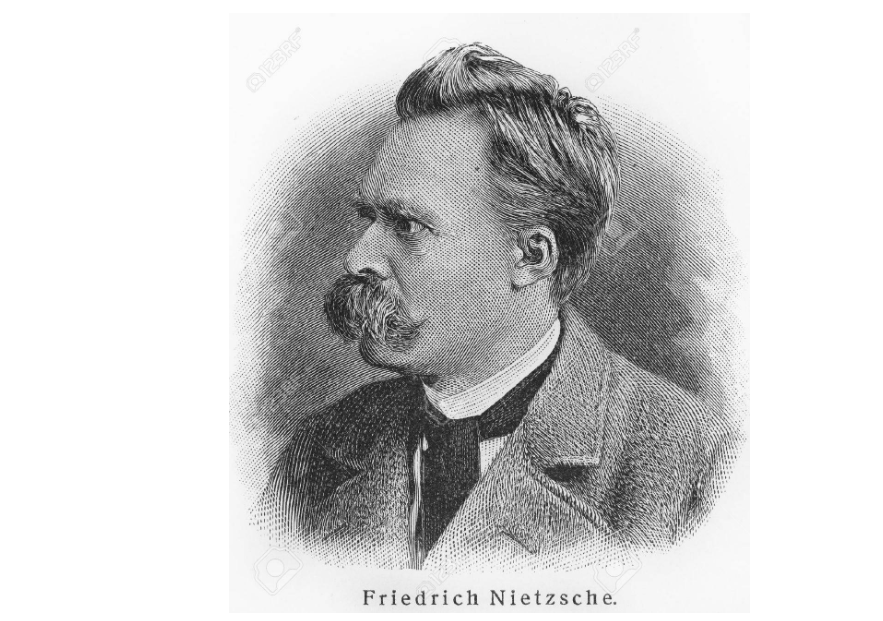
‘How One Becomes What One Is’
Some Personal Reflections on the grounds of Self-Knowledge in Ibn ‘Arabi and Friedrich Nietzsche.
Saturday March 25th, 2023 (2-5pm)
Seminar led by Peter Coates
The October Gallery, London, UK
Description
“Man is a rope, fastened between animal and superman – a rope over an abyss. A dangerous going-across, a dangerous wayfaring, a dangerous looking-back, a dangerous shuddering and staying-still. What is great in man is that he is a bridge and not a goal; what can be loved in man is that he is a going-across and a down-going.” (Nietzsche, Friedrich. Thus Spoke Zarathustra)
Mystic, philosopher, poet, sage, Muhyiddin Ibn ‘Arabi (1165-1240) was one of the world’s great spiritual teachers. He was born in Murcia in Arab al-Andalus, and his writings had an immense impact throughout the Islamic world and beyond. The universal ideas underlying his thought are of immediate relevance today (reference here)
Friedrich Nietzsche (1844 – 1900) was born in Germany. His father was a Lutheran Pastor whose tragic death when Friedrich was hardly five years old affected him deeply. Friedrich Nietzsche was a brilliant student and eventually turned to Classical Philology. At the age of only 24 he was appointed Chair of Classical Philology at University of Basel, Switzerland. He also spent some brief time as a medical orderly in the Franco-Russian war (1870-71). His extraordinary critical writings have been extremely influential on much modern thought: “I am not a man I am Dynamite”, he said. His most famous statement is, of course, “God is dead”. Nevertheless, the implications of his monumental replacement-concept of the Übermensch offers profound and surprisingly numinous insights into the very nature of self-knowledge.
Peter Coates is the author of “Ibn ‘Arabi and Modern Thought” (2002), the first book to systematically examine modern thought in the light of the universal vision of Ibn ‘Arabi. He was Senior Lecturer in the Department of Psychology at the University of Lincoln, where he taught courses in the philosophy of psychology. He has been studying the works of Ibn ‘Arabi for over 40 years.
The Masnavi of Rumi Book 3
Weekly from 19th November 2026
Thursdays 20:30–21:30 GMT
An exploration of Book Three of Jalaladdin Rumi’s Masnavi will begin in November on Zoom. To enrol in the group please contact John Brown at: besharacourses@beshara.org.
The Heart of the Masnavi
The Heart of the Masnavi
A n interactive talk by Alan Williams
10th October 2026
14:00–17:00 BST
The October Gallery, London
Book Three of Rumi’s Masnavi is generally regarded as his most profound. It can be regarded as its heart, where Rumi does not mince his words. Alan will discuss the perplexities and challenges of what some say is ‘beyond the reader’s comprehension’ (not Alan’s view).
Kernel of the Kernel
Weekly from 19th September 2026
Saturdays 14:00–15:00 GMT
Online study of The Kernel of the Kernel, a selection of key passages from Muhyiddin Ibn ‘Arabi’s Futūḥāt al-Makkiyyah, translated into Turkish with commentary by Ismail Hakki Bursevi (1652-1728AD). Translated into English by Bulent Rauf.
Love and Knowledge in the Light of Unity | the Direct Path
The Beshara Foundation Blended Learning Course
Part 1: Introductory weekend at Sutton Courtenay Abbey, Oxfordshire
16th – 18th October 2026
(Attendance Face-to-Face or by Zoom)
Followed by.
Part 2: 10 fortnightly online sessions
29th October 2026 – 18th March 2027
Thursday evenings, 19:00 – 20:30 GMT/BST
Part 3: Optional residential weekend and/or 10 days at Chisholme House, Scotland 1st–11th April 2027
This course provides a full introduction to the principles of Beshara in terms of both knowledge and practice. Taking the metaphysics of Muhyiddin Ibn ‘Arabi as a starting point, the course explores what it means to know oneself and the world in the light of the Unity of Existence.
BOOK YOUR PLACE NOW
Contact: besharacourses3@beshara.org
Mystics and Metaphysicians, East and West, Past and Present – and Future
An online course presented by Jim Griffin
Fortnightly from October 2026 – May 2027
Saturdays: 10:00am – 12:00pm (UK time)
or
Saturdays: 5:00pm-7:00pm (UK time)
Workshop series following a format of reading with contemplative meditation and shared reflections.
“The traditions of the past are very great in their own place, in the past, but I do not see why we should merely repeat them and not go further. In the spiritual development of the consciousness upon earth the great past ought to be followed by a greater future.”
Sri Aurobindo
© The Beshara Trust (UK) 2022. All rights reserved