‘Truth is One but the wise speak of it differently’
(Rig Veda)
A 5-module course from 8th September, 2021 to 4th May, 2022. Wednesday evenings from 7-8.30pm GMT/BST
Module 4 on Islamic Mysticism with Jane Clark from 2nd – 30th March, 2022. 3 spaces are available.
Please contact admin@beshara.org if you are interested.
This course will introduce participants to four major traditions of human wisdom – the philosophies of ancient Greece and India, Christian wisdom and Islamic Mysticism. As we progress through the course we will explore how these traditions might converse with one another and go on to consider what light these wisdoms have to shed on the issues the world faces today.
Course Description
We live at a very promising point in time. For the first time in history we can lay claim to all the great wisdom traditions of the world as our own. We marry, live next to, travel and have friendships with people from different cultures and religions and have access to them all at close hand. These traditions are undeniably part of our lives. At the same time human beings are facing unprecedented challenges on a global scale.
The course objectives are:
- to give participants an introduction to four major traditions of human wisdom
- to develop a learning community
- to explore how these traditions might converse with one another
- to consider what light these wisdoms have to shed on the issues the world faces today
Course Structure
The course is divided into 5 x 5 weekly modules over three terms:
- Ancient Greek philosophy (8th Sept. – 6th Oct. 2021)
- Indian spirituality (3rd Nov. – 1st Dec. 2021)
- Christian wisdom (5th Jan. – 2nd Feb. 2022)
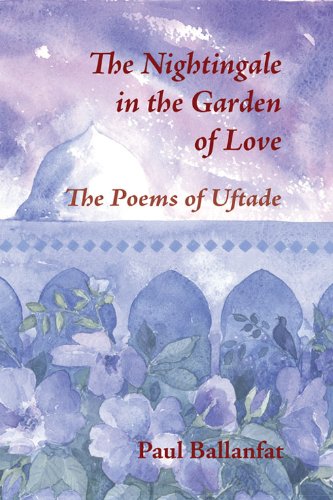
- Islamic Mysticism (2nd – 30th March 2022)
- Contemporary issues (26th April – 4th May 2022)
Course Content
(1) Ancient Greek philosophy from the Pre-Socratics to Aristotle. The theme of this module is the way wisdom was connected to living a good life, to the human soul and truth.
Week 1: Pre-socratics, Parmenides and Heraclitus: the alignment of ‘what is’ with truth
Week 2: Socrates and irony
Week 3: The death of Socrates and the life of philosophy
Week 4: Plato’s Symposium and the beauty of Eros giving the glue of reality
Week 5: Aristotle on living the meaningful life of eudaimonia
(2) Four main paths of Indian spirituality
Week 1: The message of the Upanishads (jnana yoga – of spiritual knowledge)
Week 2: The Yoga Sutras of Patanjali (raja yoga – of meditation) – yoga as samadhi
Week 3: Yoga Sutras cont. – the obstacles that cause suffering and the eight fold path
Week 4: Bhagavad Gita (karma yoga – of selfless service)
Week 5: Bhagavad Gita cont. (bhakti yoga – of devotion to God)
(3) Some aspects of wisdom within the Christian tradition
Week 1: The foundation
~ Wisdom in the teaching of Jesus
~ Jesus as the embodied wisdom of God in John’s gospel
Week 2: Confronting one’s demons: the wisdom of the mothers and fathers of the desert
Week 3: The eternal freshness of the world: the wisdom of Hildegard of Bingen
Week 4: Thomas Aquinas and a synthesis of Christian wisdom
Week 5: Meister Eckhart, the man from whom God hid nothing
(4) Islamic mysticism
Based on the metaphysics of Ibn ʿArabī (1165–1240)
Week 1: The principle of unity
Week 2: Creation and the cosmos
Week 3: The human being
Week 4: The non-human realms (minerals, plants and animals)
Week 5: The spiritual path/ return
(5) Contemporary issues
Whereas the first 4 modules are text-based, this particular module will also use a wider variety of materials e.g. films, interviews, conference presentations, and may bring in guest lecturers.
Week 1: Modern science and the understanding of consciousness
Week 2: Ecology and climate change
Week 3: Social justice
Week 4: Health (mental and physical) & well-being
Week 5: Modern poetry and contemporary expressions of the ideas we have been studying
Tutors
KEITH HAMMOND is a retired academic who lectured in philosophy for over 20 years in the University of Glasgow. For the last ten years of his career he also taught in the Islamic University of Gaza, Birzeit and Bethlehem Universities and several other universities across the Middle East. His enduring interest has always been in Ancient Greek thought and modernity, where the former can be approached as an aid to modern problems.
ELIZABETH ROBERTS studied English at Oxford, Philosophical Inquiry at Glasgow University and gained an education in the principles and practice of spirituality through the Beshara School. After a career spent in education she now teaches and practices yoga and ayurveda in the Scottish Borders, and is currently Philosophy Tutor on the Yoga Scotland teacher training course. She was Chairman of the Beshara Trust from 2008-2014.
DR JIM GRIFFIN is a psychotherapist living in the Scottish Borders. He has a PhD in comparative philosophy (Christian and Confucian) and taught for a while at university level. He teaches meditation and does some writing. The dialogue between religions in contemporary culture has been his abiding interest.
JANE CLARK MA (Islamic Mysticism) is a Senior Research Fellow of the Muhyiddin Ibn ’Arabi Society. She has a Masters degree in Medieval Arabic Philosophy from the University of Oxford, and has been studying, teaching and lecturing on the ideas of Ibn ’Arabi for more than thirty years. She is the Editor of the Beshara Magazine which aims to bring together traditional wisdom with contemporary thought.
Tuition & Timetable
Study of the modules will take place over three terms. Tuition will include an introductory presentation of each week’s material by the course tutor (this will be recorded so it can be viewed at any time) as preparation for live weekly discussion meetings on Wednesday evenings between 7pm and 8.30pm GMT/BST. Students will be sent reading material by the course tutor, who will also provide more extensive reading lists (online and in print) as a guide for anyone who wishes to go further. Between modules there will be an additional session to review each module in the light of what has been studied so far.
After each module students will be required to produce one piece of work (essay, reflective diary or video presentation) of approximately 1000 words/10 mins. A wide variety of responses, academic or personal, are possible because the course is intended to allow for the exploration of personal experience in relation to the different wisdom traditions, as well as an understanding of key concepts.
Although this is being presented as an online course, there may be a possibility of a residential element towards the end.
Certificate of study
In order to receive a Certificate of Attendance and Completion students will be required to have completed the assignments and attended a minimum of 80% of live classes. The certificate will list all topics studied, hours spent and assignments completed.
Booking & Fees
Cost: £449 for the 5 modules.
A non-refundable deposit of £100 is required by 15th August 2021 in order to secure your place for the course. The remainder of the fee (£349) is payable by 30th August 2021. Individual modules will only be offered if spaces are available, at £90 per module. Places on the course are limited, so early booking is recommended.
Payment can be accepted by Paypal or bank transfer.
Discretionary concessions for students are available on application to The Beshara Trust.
The course is open to students 16 years of age and over.
Contact: admin@beshara.org for further details and an application form